

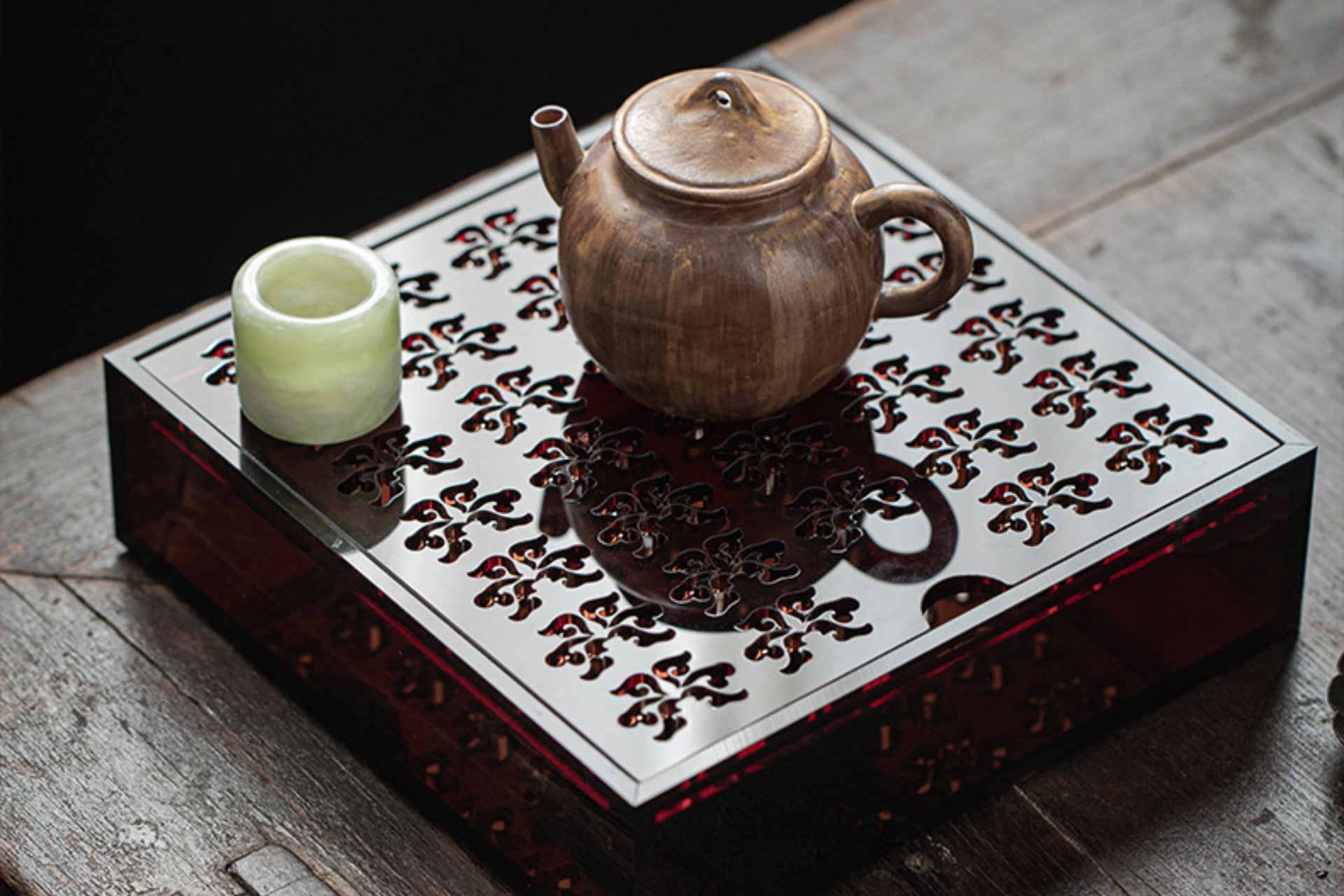
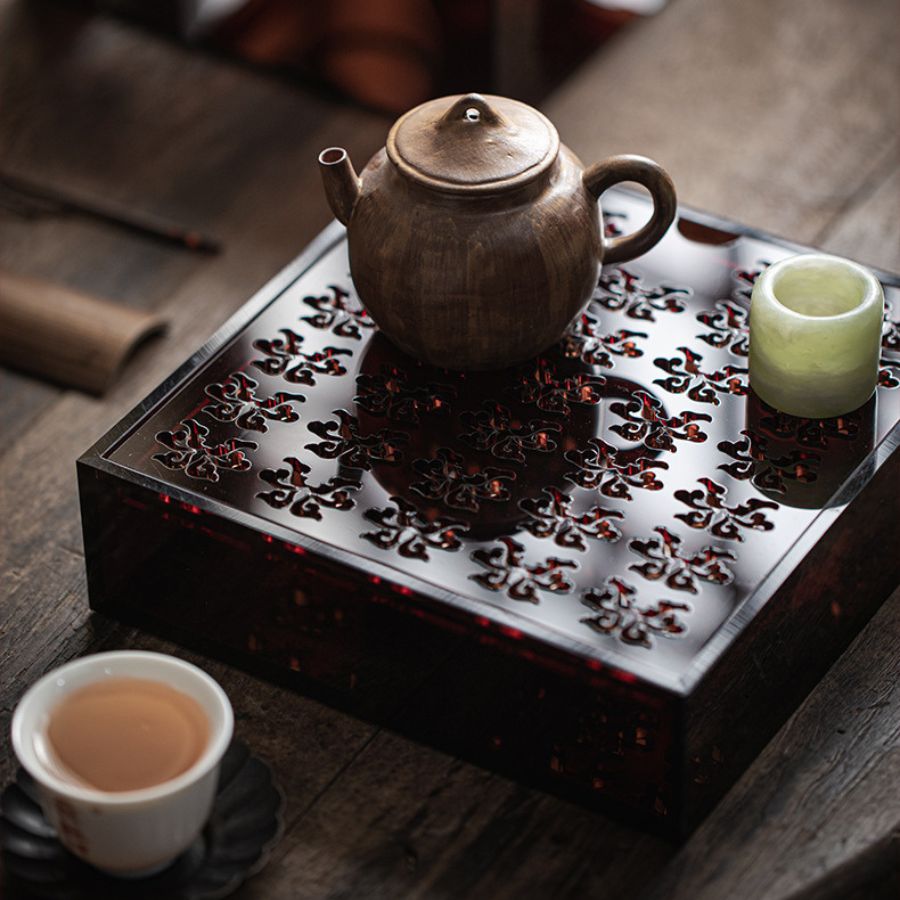


Choosing a main brewing vessel is not as simple as choosing between a gaiwan and a teapot.
Their material, shape, wall thickness, and heat retention all affect how tea performs during brewing.
Some tea vessels release heat more easily, while others retain heat better. Some tea vessels are neutral and don't absorb tea aromas or flavors easily. Others, especially porous clay vessels, can influence the taste of the tea.
So, when choosing a main brewing vessel, there is actually some scientific basis behind it. Choosing the right tea vessel can bring out the flavor characteristics of different teas, while also helping to soften certain flaws in the tea that come from processing.
This article will explain how the material, shape, and wall thickness of different main brewing vessels affect tea brewing, and help you choose the right main brewing vessel for the teas you drink most often.
What Is a Main Brewing Vessel?
The main brewing vessel in gongfu tea is the core vessel used directly to brew tea leaves and complete the process of pouring water and decanting the tea. It is the core of the whole gongfu tea set.
The main brewing vessels in gongfu tea mainly come in two forms: gaiwans and teapots.

Among gaiwans, the materials can be divided into glass gaiwans, ceramic gaiwans, clay gaiwans, and Yixing clay gaiwans, though Yixing clay gaiwans are relatively rare.
For teapots, the materials include ceramic teapots, Chaozhou hand-pulled teapots (潮州手拉壶), Yixing purple clay teapots (宜兴紫砂壶), clay teapots, and teapots made from local clay in other regions of China, such as Nixing pottery (广西坭兴壶) from Guangxi.
What Factors Should You Consider When Choosing a Main Brewing Vessel?
Here are the 5 factors you should consider when choosing your first main brewing vessel:
-
Material: Different materials have different levels of density and pore structures, which directly determine how much aroma and flavor a tea vessel can absorb.
-
Heat Retention: Heat retention controls the stability of the brewing temperature, which then affects the release of tea aroma and the extraction of flavor.
-
Wall Thickness: Wall thickness is closely related to heat retention. The thinner the vessel wall, the faster it releases heat; the thicker the vessel wall, the more stable it is at locking in temperature.
-
Capacity: Under the same water temperature and brewing method, the larger the vessel capacity, the better the overall heat retention. The smaller the capacity, the faster it releases heat and the weaker its heat retention.
-
Shape: Even when the capacity and brewing conditions are completely the same, differences in shape structure, such as tall forms and flat, low forms, can produce different layers of aroma and mouthfeel.
The Material and Craftsmanship of the Main Brewing Vessel
From the perspective of material, the common materials we see include glass, porcelain, Yixing clay, and coarse pottery. You can mainly look at the following three points:
- The first is the density and porosity of the material itself.
- The second is the firing temperature.
- The third is the production craftsmanship.
The Density Level of the Materials
In terms of density, glass and white porcelain usually sit at the most compact end of the spectrum. They have very low porosity, so they are the least likely to absorb tea aromas or flavors.
Chaozhou hand-pulled teapots are generally a little less dense, while Yixing purple clay teapots and coarse pottery vessels tend to have higher porosity.
In general, the looser the material and the more porous the vessel, the stronger its absorbency will be.
Firing Temperature and Craftsmanship Can Also Make a Difference
Besides the material itself, the firing temperature is also very important.
Even for the same type of gaiwan, if the firing temperature is higher, the body of the vessel is usually denser, and its absorbency will also be weaker.
So when choosing a gaiwan, it is usually better to choose a high-fired one, usually fired above 1300°C.

Besides firing temperature, the production craftsmanship may also affect the density of the vessel.
Let’s still compare Chaozhou hand-pulled teapots and Yixing purple clay teapots.
The clay used for Chaozhou hand-pulled teapots is usually relatively fine, and the teapot is formed by hand-pulling. Yixing purple clay teapots are commonly formed through techniques such as beating and joining.
The body of a Chaozhou hand-pulled teapot is usually more compact than some Yixing clay teapots, so in terms of absorbency, a hand-pulled teapot is usually less absorbent than a Yixing clay teapot.
Similarly, the firing temperature of Chaozhou hand-pulled teapots is also relatively high, which also makes the body of the vessel tighter and more compact.
So, for these materials and tea vessels, we can arrange them in the following order:
Density: glass gaiwan > white porcelain gaiwan > Chaozhou hand-pulled teapot > Yixing purple clay teapot > clay teapot
Absorbency: clay teapot > Yixing purple clay teapot > Chaozhou hand-pulled teapot > white porcelain gaiwan > glass gaiwan
Heat Retention of the Main Brewing Vessel
What is heat retention mainly related to?
It is mainly related to the heat conduction speed of the material and the thickness of the vessel itself. Generally speaking, the faster the heat conduction, the faster the heat loss, and the weaker the heat retention.
For example, glass vessels release heat relatively quickly, followed by thinner white porcelain gaiwans.
Vessels like Chaozhou hand-pulled teapots, Yixing purple clay teapots, or other clay teapots usually have better heat retention because their bodies are relatively thicker.
Why does heat retention have such a big impact on tea brewing?
This has a lot to do with the tea you are brewing. It depends on the characteristics of that tea itself.
For example, green tea usually does not need to be brewed at a very high temperature. A water temperature of around 80°C to 90°C is more suitable.
So when choosing a vessel, we do not want to choose a tea vessel with too much heat retention.
Because if the heat retention is too strong, the tea leaves can easily be stewed or overcooked, and the tea liquor can also become bitter and astringent.
But if it is oolong tea, especially rock tea or dancong oolong, these teas often need a relatively high temperature to bring out their aroma.
In this case, a tea vessel with better heat retention can better maintain the temperature and allow the aroma and flavor to come out more fully.
Wall Thickness of the Main Brewing Vessel
The thickness of the vessel also affects the flavor of the tea. The thinner the vessel, the faster it releases heat; the thicker the vessel, the more stable the temperature.
This is actually related to the heat retention mentioned earlier.
If a tea has a mellow and thick mouthfeel, like aged white tea or heavily roasted teas, we usually enjoy its body, sweetness, and smooth tea liquor. In this case, we want the temperature of the tea vessel to be relatively stable.
But if you are brewing dancong, which has a more delicate aroma and richer layers, you may want to choose a thinner vessel, such as a thinner gaiwan or a thinner hand-pulled teapot. This can better show the aroma, layers, and delicacy of oolong tea.
Shape of the Main Brewing Vessel
The shape of the vessel also affects gongfu tea brewing.
Under the same capacity, same wall thickness, and same brewing method, a tall teapot and a flat, low teapot can produce completely different flavor profiles.
A tall teapot has a deeper body. After adding the tea leaves, the leaves are concentrated in a smaller area at the bottom. When water is poured in, the downward impact of the water stream is more concentrated.

This can fully stimulate the inner substances of the tea leaves, allowing the tea aroma to leave the leaves more quickly and rise upward, making the aroma more pronounced and the layers clearer.
A flat, low teapot has a larger horizontal area and a wider, flatter shape. When water is poured in, the impact of the water flow is dispersed, so the force on the tea leaves is gentler.
At the same time, the flat and rounded internal space is better at gathering heat and locking in flavor. It sacrifices part of the high, lifted aroma, but it can better retain the mellow texture of the tea liquor, making the taste softer, fuller, and the mouthfeel thicker.
Simply put: a tall teapot makes the aroma more pronounced, while a flat teapot brings out a richer taste.
Even if the capacity, clay material, and brewing method are all the same, the height, flatness, and roundness of the teapot body alone can directly change the aroma and flavor performance of the tea liquor.
Capacity of the Main Brewing Vessel
The capacity of a gongfu tea main brewing vessel also has a big impact on the brewing result.
The main influencing factor is the tea-to-water ratio. Generally speaking, the capacity of a gaiwan is usually between 90 ml and 200 ml, while the maximum capacity of a teapot can sometimes be more than 200 ml. Smaller teapots can also be only 90 ml, and there are many small teapots like this in Chaozhou.

It is usually recommended that the capacity of a teapot or gaiwan should be around 120 ml. This is one of the most practical sizes for gongfu tea brewing because it works well for 1 to 5 people.
If there are many people, you will need a larger capacity for brewing, but at that time, the tea-to-water ratio will also be higher, which means it might be harder to control the tea-to-water ratio.
For more information related to the tea-to-water ratio and brewing time of gongfu tea, you can check this article.
How to Choose a Main Brewing Vessel for Different Teas
If you're new to Chinese gongfu tea, a white porcelain gaiwan is the best choice. It might feel a bit tricky at first, but once you get used to it, you’ll start to see its advantages.
It is relatively neutral, does not easily absorb the flavor of any tea, and is usually fired at a high temperature.
If you mostly brew green tea or enjoy the visuals, a glass cup or gaiwan is a great option. Glass lets you see the tea leaves unfold and the color of the tea. Especially when brewing green tea, you can clearly see the state of the tea leaves in the water.
At the same time, green tea usually does not need to be brewed at a very high temperature. A water temperature of around 80°C to 90°C is more suitable.
To brew oolong tea, rock tea, Tieguanyin, or other high-temperature teas, try using a white porcelain gaiwan, a Chaozhou hand-pulled teapot, or a Yixing purple clay teapot. Oolong teas often need a relatively high temperature to bring out their aroma.
If a tea has a mellow and thick mouthfeel, like aged white tea or aged oolong, we often enjoy its body, sweetness, and smooth liquor. This is true for some fully fermented and heavily roasted teas, too. In this case, a relatively thick teapot with good heat retention may be a good choice.
The following table can be used as a reference to choose the most suitable brewing vessel according to different tea types:
|
Tea Type |
Recommended Main Brewing Vessel |
|
Green Tea |
Glass cup, glass gaiwan, white porcelain gaiwan |
|
White Tea |
White porcelain gaiwan; aged white tea can be brewed with a Yixing purple clay teapot or clay teapot |
|
Yellow Tea |
Glass cup or white porcelain gaiwan |
|
Oolong Tea |
White porcelain gaiwan, Chaozhou hand-pulled teapot, Yixing purple clay teapot |
|
Black Tea |
White porcelain gaiwan |
|
Dark Tea / Pu-erh Tea |
White porcelain gaiwan, Yixing purple clay teapot, clay teapot |
Gaiwan vs Teapot: Which One Is Better?
With the information above, let’s summarize how to choose between a gaiwan and a teapot. First, you need to choose according to the fermentation level of the tea:
A gaiwan is suitable for teas of all fermentation levels because it has high density and does not absorb flavors.
If it is semi-fermented tea, such as oolong, besides choosing a gaiwan, you can also choose a hand-pulled teapot or a Yixing purple clay teapot.
For post-fermented teas, such as ripe Pu-erh, dark tea, and Liubao tea, choose a Yixing purple clay teapot or clay teapot.
The advantages and disadvantages of gaiwans and teapots are compared below:
|
Comparison Dimension |
White Porcelain Gaiwan |
Chaozhou Hand-Pulled Teapot |
Yixing Purple Clay Teapot |
Coarse Pottery Teapot |
|
Suitable Tea Types |
Suitable for all tea types |
Rock tea, dancong, various oolong teas, medium-roasted teas |
Oolong tea, aged white tea, raw and ripe Pu-erh, dark tea, aged teas |
Ripe Pu-erh, dark tea, heavily roasted aged tea, aged teas |
|
Ease of Use |
Harder to use than a teapot at first |
Easy |
Easy |
Easy |
|
Heat Retention |
Thin walls release heat quickly and preserve the original taste |
Fine and compact body, moderate heat retention, gathers aroma without stewing the tea |
Strong heat locking and heat retention, long-lasting stable temperature, easy to stimulate the inner substances of the tea |
Thick walls and large pores, strongest heat retention and flavor gathering |
|
Cleaning Difficulty |
Easy |
Medium |
Medium |
Medium |
|
Price Range |
Affordable and beginner-friendly, best value for money |
Wide range; semi-handmade pieces are cheaper, fully handmade pieces are more expensive |
Wide range; semi-handmade pieces are cheaper, fully handmade pieces are more expensive |
Wide range; semi-handmade pieces are cheaper, fully handmade pieces are more expensive |
If you are a beginner in gongfu tea, drink different types of tea in daily rotation, want a versatile vessel that does not mix flavors, and want to preserve the most original aroma and taste of the tea leaves, choose a gaiwan first.
We also have a detailed guide on how to choose your first gaiwan and how to practice with it so you can get used to it faster. It is actually not that difficult.
If you usually mainly brew rock tea, dancong, aged white tea, dark tea, Pu-erh, or other heavily roasted or aged teas, need stable high temperature to bring out the tea aroma, like tea liquor that is mellow, soft, full-bodied, and sweet, and also want to use the tea vessel to soften the fire notes and flaws that come from tea processing, then choose a teapot.
Chaozhou hand-pulled teapots, Yixing purple clay teapots, and clay teapots can all work well. Remember to follow the principle of dedicating one vessel to one type of tea to avoid flavor mixing.
Conclusion
The choice of a main brewing vessel is not about which one is the most expensive, nor which one looks the most professional. It is about whether its material, heat retention, wall thickness, and shape are suitable for the tea you are brewing.
You can choose the most suitable main brewing vessel based on the points above and the type of tea you currently enjoy brewing the most.

