

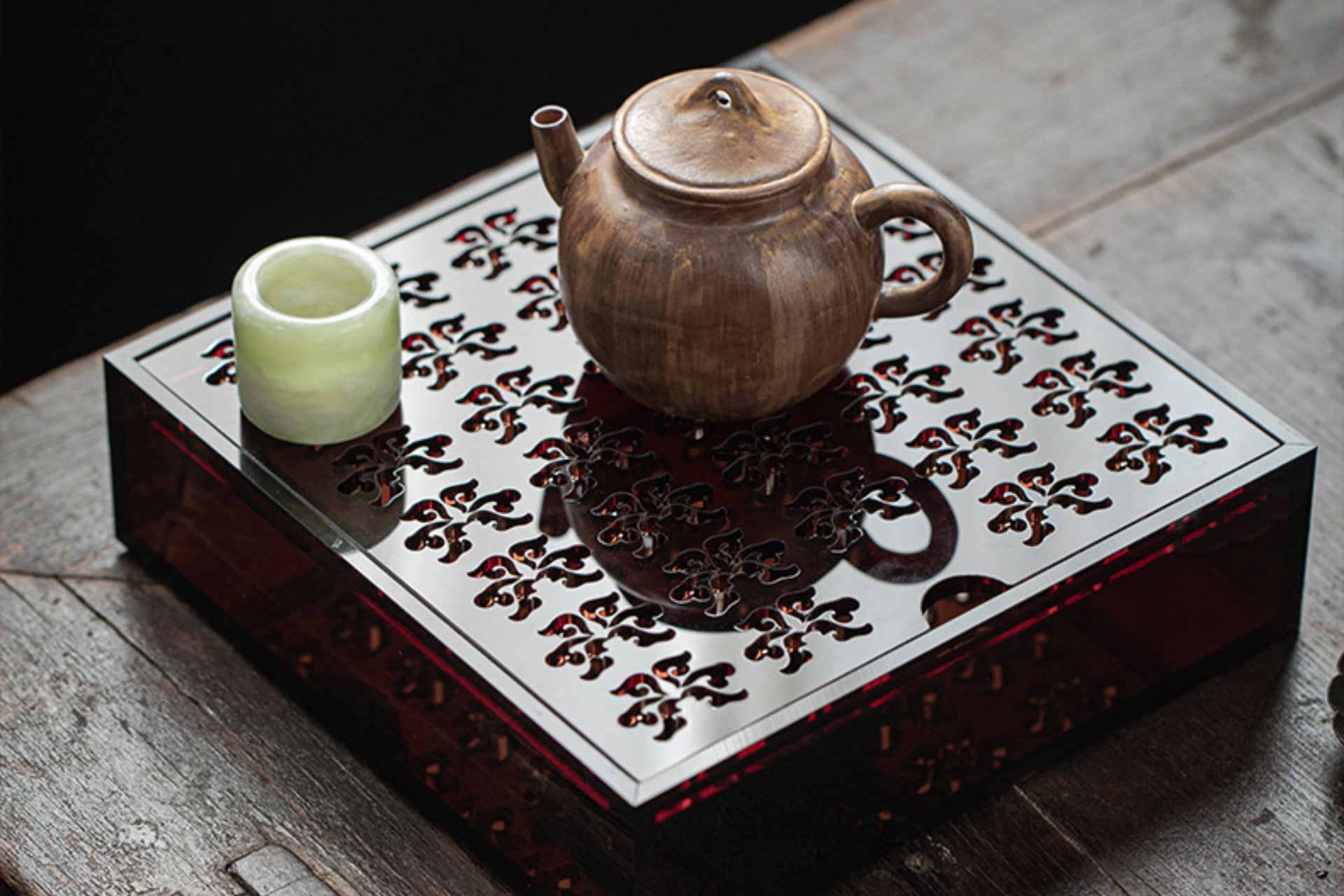
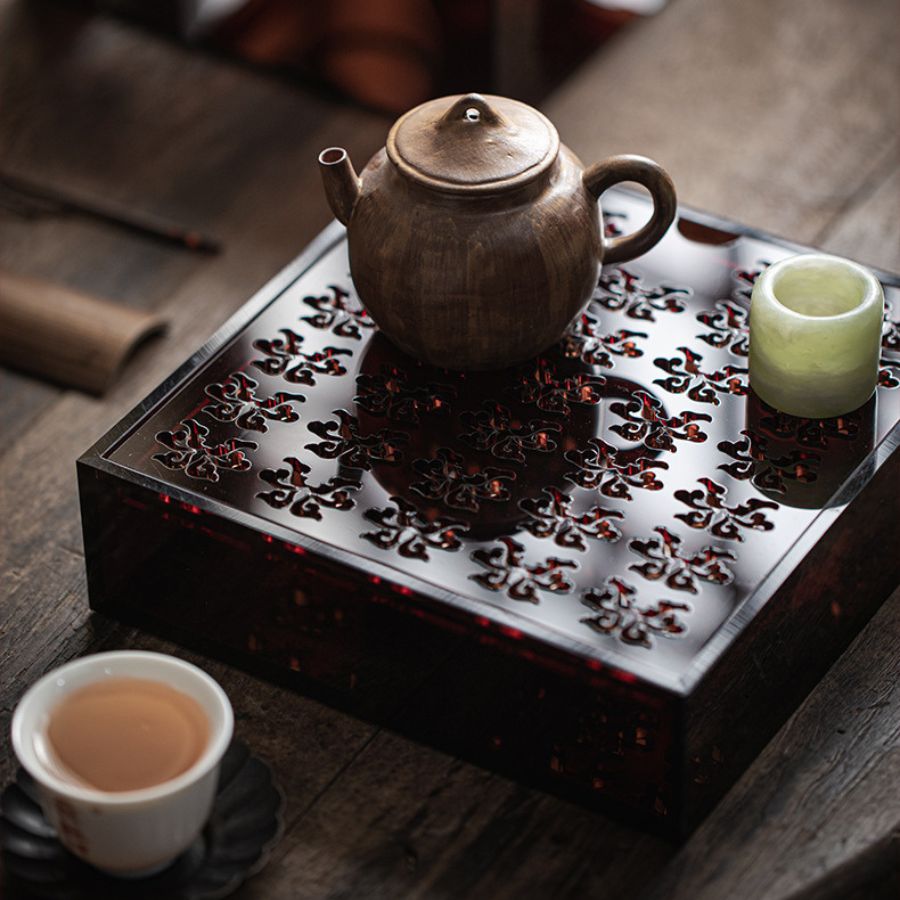


You love your cup of tea, and recently, you’ve been thinking of trying Gongfu tea. So a Chinese tea set is the next thing you want to buy.
If that’s not you, maybe you’re planning a surprise gift for a friend or family member who loves Chinese tea.
What’s more, you want this gift to impress at 100%. You're researching the history of Chinese tea sets. You want to know about their types, components, uses, care, cost, and where to buy the best ones.
You just found everything in one place: our comprehensive guide to the Chinese tea set.
What Is a Chinese Tea Set?
Let’s go by the name and say that a Chinese tea set is the traditional teaware used for centuries to brew and serve tea according to the Chinese tea culture. The Chinese call it chá jù (茶具). The tea set is especially cherished in the Gong Fu loose-leaf tea brewing ceremony.
The main thing that makes the Chinese tea set stand out, especially when placed alongside Western tea sets, is that it is a set of small vessels for small volumes of tea. The small volume allows you to sip and savor the tea while it’s still hot.
Tea lovers can enjoy several quick infusions from the same tea. This is different from the long steep used for a mug of tea in the Western style.
The Chinese tea set also allows you greater control over water temperature, steeping time, and tea strength. This way, you can enjoy the tea’s flavor layers, aroma, and mouthfeel in a small volume.
Let’s just say that brewing tea with the Chinese tea set is less about the quantity and more about savoring the drink in an entire sensory experience.
So, how did the Chinese start to brew tea in this special set? Let’s talk about the Chinese tea set.
The History of Chinese Tea Sets
Chinese tea sets have evolved for over 2,000 years, closely tracking how tea was prepared and enjoyed across different dynasties. Tea ware began with simple functional vessels and gradually became more refined and artistic, especially from the Song through the Ming and Qing.
-
Han Dynasty (206 BC–220 AD): Tea was boiled in simple proto-porcelain, pottery, or lacquer vessels; teapots as we know them did not exist yet.
-
Tang Dynasty (618–907 AD): Boiled tea was served in bowls that became increasingly refined. Tea culture also flourished after Lu Yu’s Cha Jing (The Classic of Tea), which described a full set of tea utensils.
-
Song Dynasty (960–1279): Whisked powdered tea became popular. Black-glazed cups were favored because they made the white froth stand out in competitive tea tasting (doucha). A slender water pot (tangping) was commonly used for pouring hot water.
-
Ming Dynasty (1368–1644): Loose-leaf tea rose to prominence, shaping the teapot-based tea set and small cups designed for infusion. Teaware in terracotta and porcelain became more sophisticated and decorative.
-
Qing Dynasty (1644–1912): Regional styles became more distinct, and Yixing purple clay and white porcelain sets were widely used. This period strongly shaped the traditional Chinese tea sets we recognize today, blending function with craftsmanship.
Refining Chinese tea sets has continued after the last dynasty, producing the elegant Chinese tea sets we see today in numerous types.
Types of Chinese Tea Set
When it comes to Gongfu Cha, or the Chinese tea brewing, the tea sets are grouped by the main brewing vessel: the Gaiwan (lidded bowl) and the Teapot.
To set up a complete Gongfu tea experience, just add a fairness pitcher (gongdao bei) and a few tasting cups. Some sets come with a portable tea tray, too.
Gaiwan as the Main Brewing Vessel
The Gaiwan sets are unique because they are versatile and release the aroma of delicate teas well. They pour quickly and are good for beginners, as well as for tasting different teas without mixing their flavors. If you're new to Chinese tea, a Gaiwan tea set might be a better option.

Here’s a quick breakdown of the main features of Gaiwan tea pots.
|
Gaiwan tea sets |
Main Parts |
Common Materials |
Best Tea Types |
Best Features |
|
|
|
|
Teapot as the Main Brewing Vessel
Teapots made from porous clay are known for retaining heat well. Due to their slightly porous structure, they may absorb small amounts of tea oils during repeated use. While the effect is subtle, some tea drinkers believe this can gradually influence the overall brewing character.
Because of this, clay teapots are often reserved for one specific tea type.
|
Teapot sets |
Main Parts |
Common Materials |
Best Tea Types |
Best Features |
|
|
|
|
What Are the Components of a Chinese Tea Set?
Gaiwan tea sets and teapot sets may differ, but they usually share the same parts for tea brewing. They include:
Main Brewing Vessel
The main vessel in Chinese tea brewing is either the Gaiwan or the teapot. Their basic parts are the same: a lid and the main vessel.
The Gaiwan’s main vessel is a bowl. But Gaiwans also have a saucer beneath them. The teapot has a vessel with a spout, or a projecting tube that pours the tea.
Tea Cups
Tea cups in a Chinese tea set can be ‘tasting cups’, holding 20-50mls, or ‘hosting cups’, holding 40-100mls.
Fairness Cup/Serving Pitcher
The fairness cup helps maintain the consistency of the tea taste in Chinese tea brewing. Once you steep the tea in a pot or Gaiwan, you pour it into a fairness cup before the drinking cups.
The idea is that everyone will drink tea with the same flavor. This wouldn't happen if the tea were poured straight from the brewing vessel.
Tea Tray
In a Chinese tea set, the tea tray is for neatness. Its purpose is to hold the other parts in place and collect excess water while brewing and drinking. That’s why most Chinese tea trays have a reservoir beneath a slatted top surface that can be lifted.
Other Chinese Tea Set Tools / Add-ons
The four Chinese tea set components above are what we could consider 'must-haves.'
Still, several other add-on tools or accessories can improve how you brew and drink tea. These items help you manage tea leaves cleanly. They also make brewing easier.
They include:
-
A tea scoop: For measuring the tea leaves.
-
Tea caddy: The tea storage container to keep the tea leaves from air, moisture, light, and odors.
-
A tea needle/pick: For separating the tea leaves, clearing the sprout, or opening the lid when the pot is hot.
-
Tongs: For handling hot tea ware.
-
A strainer: To prevent tea leaves from falling into the fairness pitcher.
-
A tea pet: A clay figurine that works as a companion in tea drinking and is a symbol of good luck.
Check out our Gongfu Tea Sets Parts Guide for a full breakdown of these tools.
How to Use a Chinese Tea Set
So, you now know what a Chinese tea set is, its components, and its types. But exactly how do you use the Chinese tea set?
We’ll assume that your Gongfu tea set is already arranged on a tray. Here are the steps to follow when using a Chinese tea set.
If you’re not sure how to use a gaiwan, read our comprehensive step-by-step guide.
Step1: Warm the Teaware
Freshly made Chinese tea tastes better warm. So, to help preserve the temperature and make the tea brew evenly, rinse the teapot or Gaiwan, fairness cup, and drinking cups with hot water.
Step2: Rinse the Tea Leaves
This is an optional step, but including it can help “wake up the tea” so it infuses better. It also serves to rinse the tea of any surface dust, especially roasted teas like Oolong and Pu-erh.
Place the tea leaves in the teapot, then pour water to the halfway or one-third mark. Discard the water immediately.
Step3: Add Tea Leaves
If you skipped step 2, scoop a small amount of the loose-leaf tea from the caddy and place it into the Gaiwan.
Step4: Brew the Tea
To brew the tea, add hot water to the vessel with the tea leaves. Cover it and let it steep for 15 to 30 seconds for the first brew.
Step5: Transfer into the Fairness Cup
Pour the tea into the fairness cup. You can use the strainer here to ensure no tea leaves go into the pincher.
Step6: Serve the Tea
Serve the tea from the fairness pitcher into the tasting or drinking cup and allow yourself savor the flavor and aroma.
Step7: Brew Again
Repeat steps 4-6 for subsequent infusions. Be sure to let the tea steep a little longer each time than the previous time, as the strength of the tea reduces with each brew. If your tea is good quality, you can do up to 10 or more steeps.
Once you’ve used the tea set, your next worry will be how to maintain or care for it.
How to Maintain Your Chinese Tea Set
Properly maintaining your Chinese teaware helps preserve its beauty and flavor performance—and makes it last longer. Care details vary by material, but these tips apply to most sets:
-
Rinse after every use. Avoid soap on clay or other unglazed pieces. For porcelain or ceramic, a mild detergent is fine occasionally—never use abrasive scrubbers. For stubborn tea stains on porcelain or glazed ceramic, use a Magic Eraser with a drop of dish soap—it works fast.
-
Air dry completely before storing. Let everything dry on a rack, and never store teaware while it’s still damp, especially clay pieces.
-
Reserve unglazed clay for one tea type. Because clay absorbs aromas over time, it’s best to dedicate clay teapots and gaiwans to the same tea category.
-
Handle with care. Avoid extreme temperature changes, and don’t wash teaware together with other kitchenware.
With that covered, let’s talk about how much a Chinese tea set costs—and where to buy a good one.
How Much Does a Chinese Tea Set Cost?
Our research on Chinese tea set sellers showed prices vary widely. They start at $10 and can go over $300.
Chinese tea set prices vary widely. This depends on factors like material, artistry, size, and portability.
-
Material: Glass teapots usually cost less than ceramic and porcelain ones. The priciest are made from high-quality Yixing purple clay. Gold-coated Chinese tea sets are very expensive. We found a 6-cup set priced over $600!
-
Art: Art plays a key role in Chinese tea sets and can raise prices. For instance, a hand-painted Gaiwan costs more than a machine-made one. Antique art or art with extra value can also boost a teapot's price.
-
Set Size and Pieces Included: Price often depends on how many pieces the set comes with. A simple set with just a gaiwan and a couple of cups is often under $50. If the set includes more accessories—like a fairness pitcher (cha hai), aroma cups, a tea strainer, or other add-ons—the price can go higher, sometimes over $100.
Where to Buy a Premier Chinese Tea Set
You can buy top-quality Chinese tea sets directly from artisans or from online tea shops. Online marketplaces like Walmart and Amazon are also an option.
If you’re just getting started, you don’t have to buy a full set. Our Mix & Match page lets you choose from 300+ pieces of teaware, so you can start with the essentials you need and add more over time.
If you’re buying as a gift, you can go for a more premium set. These higher-end combinations often include more accessories, so the whole gift feels more complete and elevated.
At summitbreezetea.com, we have a wide range of premier Gaiwans and Chinese teapots at pocket-friendly prices. You can choose from clay, porcelain, ceramic, and opt for portable or home-use sets in a range of decorative arts.
Visit our collections and find something unique for yourself or as a gift to someone special.
Final Thoughts
People who love their cup of tea know that the Chinese tea set is a symbol of elegance in tea brewing. Be intentional when buying your set. Whether you need it for daily tea or hosting, choose wisely.
We’ve made sure to tell you everything about the Chinese tea set in this guide. From the interesting history during the Chinese dynasties, the tips for caring for your set, and the Chinese tea set buying guide.
Now, you have all the tools to enjoy your Chinese tea in its full flavor and aroma.


