

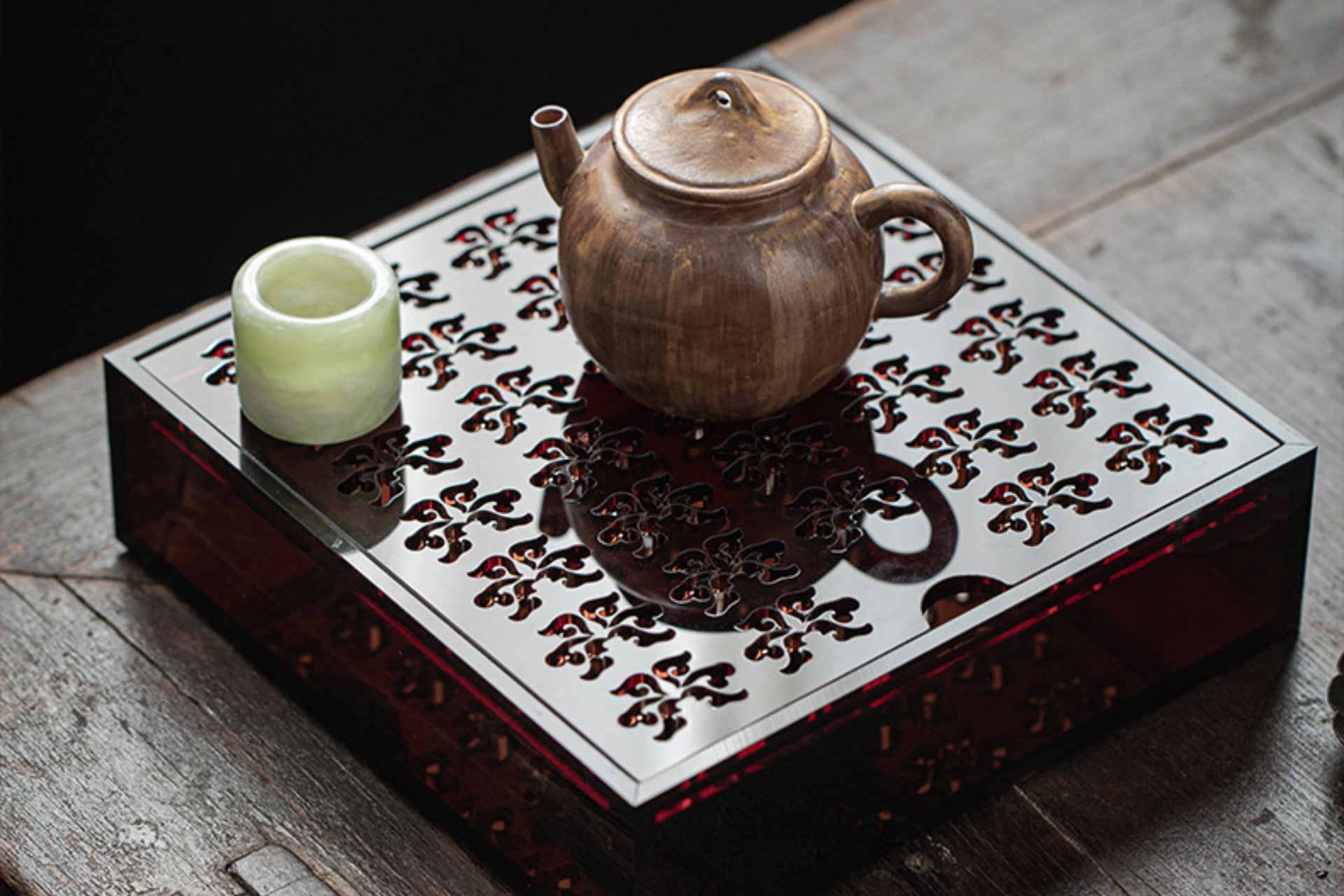
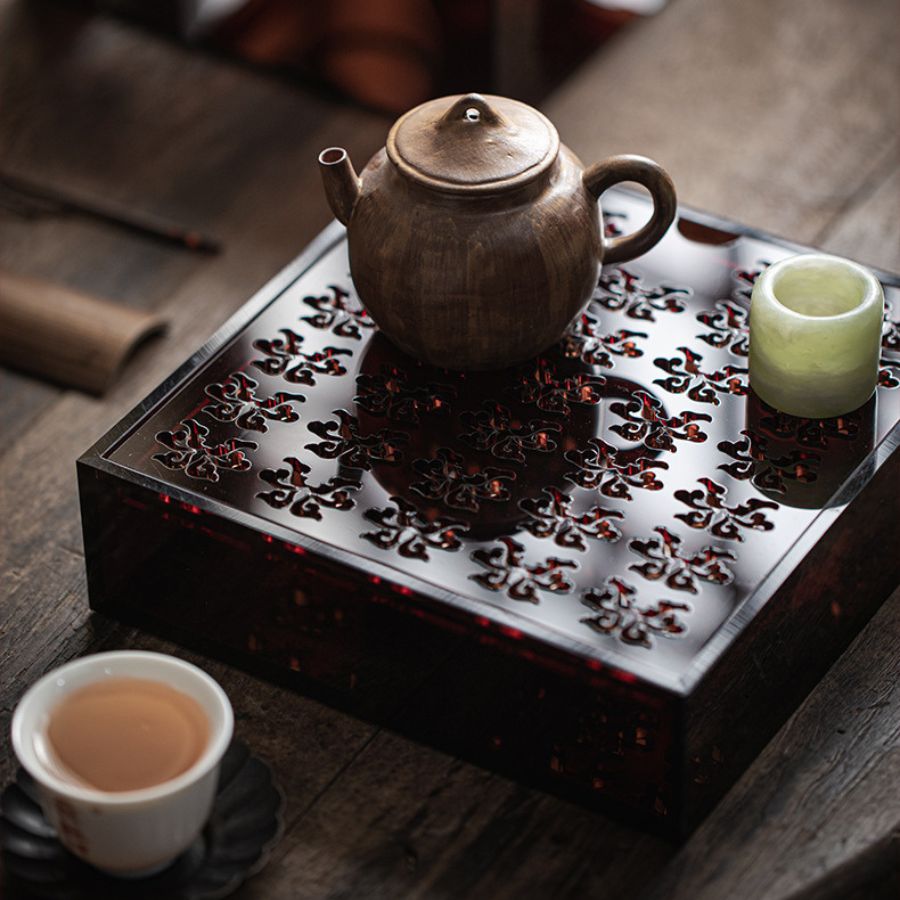


The tea boat is the quiet cornerstone of dry gongfu tea brewing.
Instead of using a large draining tea tray, it helps hold your teapot or gaiwan, collect waste water, and keep the brewing area clean and simple.
In this guide, we’ll explain what a tea boat is, how to use it, and how to choose the right one for your tea table.
What Is a Tea Boat?
The term “tea boat” comes from the Chaozhou gongfu tea tradition. It is the most direct English translation of the Chinese term 茶船.
As the dry brewing method has become more popular, many tea drinkers now use shallow or deep bowl-shaped vessels instead of the traditional tea boat. In Chinese, this type of vessel is often called a 壶承, which can be translated as pot stand.
In English, however, a pot stand is often broadly called a tea boat as well. Some smaller tea trays with built-in water storage may also be referred to as tea trays.
Generally speaking, tea boats can be divided into three main types.
The Three Main Types of Tea Boats
1. Traditional Chaozhou-Style Tea Boat
Traditional Chaozhou-style tea boats are commonly made from two types of materials: tin and local Chaozhou clay.
This type of tea boat can be understood as a combination of a pot stand, tea tray, and waste-water vessel. In other words, it functions like a small, portable, complete tea tray.

2. Bowl-Shaped Pot Stand
This is the type of pot stand mentioned earlier. It is usually shaped like a deep bowl, though some designs may have more irregular forms.
Most of them include a built-in water storage structure, while some do not. Common materials include ceramic, metal-composite materials, and solid metal.
The main difference between this type and a traditional Chaozhou tea boat is size and function.

A traditional Chaozhou tea boat is larger. It can hold not only a gaiwan or teapot, but also three tasting cups.
A smaller bowl-shaped pot stand, on the other hand, is mainly used to hold the main brewing vessel, such as a gaiwan or teapot. Its water capacity is limited, so it is usually used together with a waste-water bowl.
3. Modern Portable Tea Trays
Modern portable tea trays are made from materials such as ceramic, eco-friendly composite materials, and solid wood.
Their shapes are no longer limited to the traditional Chaozhou style. Many modern designs are rectangular, square, or round. They are more like improved, portable tea trays designed for modern tea setups.

In English, this type of vessel can be called a tea tray, but it is also often broadly referred to as a tea boat.
In Simple Terms
A tea boat is a dedicated vessel used to hold your gongfu tea ware. It can be large or small.
For a small size tea boats, they may also be called a pot stands. It is mainly used to hold the main brewing vessel, such as a gaiwan or teapot.
For a larger size tea boats, they may also be called a portable tea trays. Besides holding the main brewing vessel, it can also hold around 3–5 tasting cups.
What Is a Tea Boat Used For?
A large tea boat combines the functions of a tea tray, waste-water vessel, and pot stand.
It can hold a full basic tea setup, store waste water, and also help retain heat to some extent.
For smaller dish-shaped or mesh-style tea boats, the main function is usually heat retention.
When brewing gongfu tea with a teapot, many tea drinkers like to pour hot water over the outside of the teapot after putting the lid back on. This helps warm the pot and maintain its temperature. The pot stand catches the waste water from rinsing the pot while also helping the teapot stay warm.
So, in simple terms, the two core functions of a tea boat are:
water storage and heat retention
Tea Boats and the Dry Brewing Method
Gongfu tea can generally be divided into two brewing styles: the wet brewing method and the dry brewing method.
The wet brewing method usually uses a large integrated tea tray with a drainage pipe. Waste water flows directly into a bucket or container underneath.
The dry brewing method relies on a combination of a pot stand and a waste-water bowl to manage water. It does not require a large tea tray. With a few small pieces of tea ware, you can complete the entire brewing process.
This is why the tea boat is one of the most commonly used vessels for dry brewing sessions.
Looking for a tea boat for your own setup? Explore our collection and get 10% off your first order. Each piece comes with a matching teapot mat.
How to Use a Pot Stand
Use It With a Teapot Mat
Use a teapot mat to reduce friction between the pot stand and the teapot. This helps protect both the bottom of the teapot and the surface of the pot stand.
Place It in the Center of the Tea Setup
Place the pot stand in the center of your tea table. This makes it easier to rinse the pot, maintain the pot, and collect waste water during brewing.
Let It Hold Waste Water
If your tea boat has built-in water storage, the waste water from rinsing the pot can stay inside during the session. You can empty and clean it after brewing.
Clean and Dry It After Use
After your tea session, rinse the tea boat and place it in a well-ventilated area to dry naturally. This helps prevent unwanted odors.
How to Choose the Right Pot Stand
Beginner-Friendly Choice
If you want one large tea boat to replace a tea tray, waste-water bowl, and pot stand, choose a larger size.
A diameter of 20 cm or more is recommended, with a single-use water capacity of around 300–400 ml. This is suitable for a complete brewing session for 1–3 people.
With just one piece, you can cover all the basic needs of a gongfu tea setup. This is most recommanded for beginners or tea drinkers who usually brew for a small number of people.
For More Experienced Use
Once you are familiar with gongfu tea brewing and already have a favorite teapot, you may want to start exploring the dry brewing method.
In this case, you can choose a bowl-shaped tea boat or pot stand with a smaller water capacity.
This type of vessel is simple and restrained in shape. It can make the whole tea setup feel more refined, minimal, and elegant.
For Long-Time Tea Drinkers
For more experienced tea drinkers, choosing a pot stand is no longer only about water storage and practicality.
At this stage, the overall atmosphere and aesthetic of the tea setup become more important.
Instead of always chasing new designs, you can slowly look for older tea boats or vintage pot stands.
These older pieces are usually limited in quantity and rarely mass-produced. Most of the time, you need to take your time, search patiently, and wait for the right piece to appear. A good old tea boat often enters your tea table by chance and timing.
Conclusion
The right tea boat gives your teapot a place to settle. When the shape, color, and material pair well with your teapot or gaiwan, the whole tea table feels more integrated. Explore our tea boat collection and find a piece that makes your dry gongfu setup feel complete.

